
Booking
All our classes can be booked online at www.bookwhen.com/movewithdebs (opens in a new tab).
If this is your first class, please complete a short health self-assessment before you come (see HEALTH QUESTIONNAIRE link in main menu).
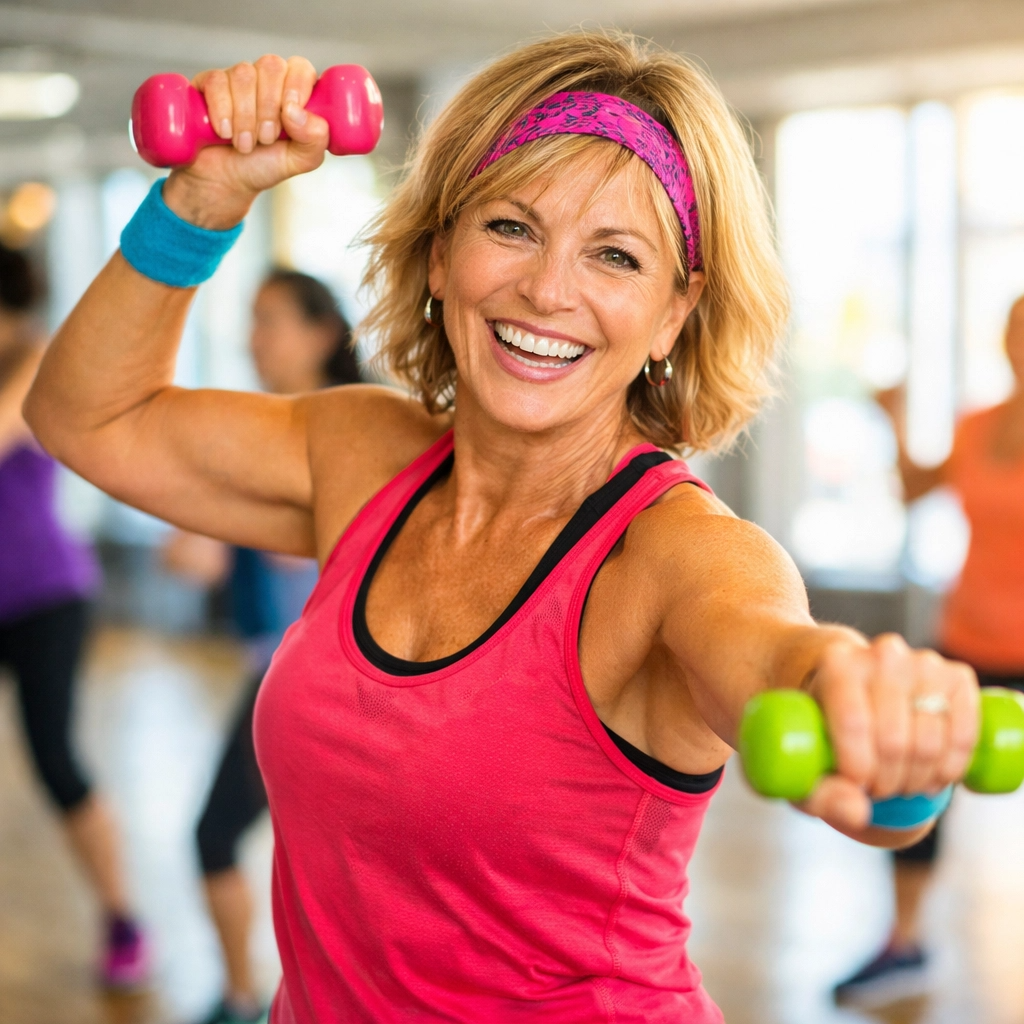
DanceFit Lite
A gentle, low-impact dance class using music you know and love — with a little Jive and Lindy Hop to get your feet tapping.
Improve fitness, coordination and confidence at your own pace, with plenty of options throughout.
Light weights help build strength, while upbeat tracks support heart health, brain function and everyday mobility — all in a warm, welcoming space.
Best suited to those already comfortable with light exercise. If you’re returning after a cardiac event or recent health issue, our Forever Active class offers a more supported place to start.
Bring your best smile… and your singing voice, however terrible!
No experience needed. Just come as you are.
When and Where?
Tuesday 10:00 at Central Hall, Keighley
-
Wear comfortable clothes you can move easily in and supportive footwear (trainers are ideal).
Bring a drink, and a light jumper or layer for relaxation at the end.
If you have your own light hand weights (up to 2kg), feel free to bring them — otherwise I’ll guide you with what we’re using in class.
Please also let me know before we start if anything has changed with your health.
-
What happens in a class
This is a 45 or 60 minute, low-impact dance fitness class designed to help you move, feel stronger, and enjoy exercise again — without the feel of a gym.
We begin with a gradual warm-up, using simple movements like marching and toe tapping to gently prepare the body. The aim is to ease you in, not rush you.
From there, we move through a mix of:
light aerobic routines set to familiar, uplifting music
gentle strength work using small hand weights
easy-to-follow sequences that support both body and brain
Music plays an important part in the class. The songs are well-known and chosen for their feel-good, sing-along quality. You’re always welcome to join in - even quietly - as it helps lift mood, and it also gives me a natural way to see how your breathing is responding.
Stretching and recovery are woven throughout, so your body gets regular moments to release and reset as you go.
You might also notice I move around the room as I teach. This is so each row has a chance to see clearly, rather than everything coming from the front.
There’s always a chair nearby for balance or reassurance, if you are less steady on your feet that day and you can take things at your own pace.
What makes this different
This isn’t about pushing through or getting everything “right”.
It’s about enjoying movement in a way that feels good, sustainable, and kind to your body.
The routines are thoughtfully put together so they are:
simple enough to follow
gently challenging for coordination and focus
adaptable depending on how you feel that day
We use light hand-held weights not to strain, but to support strength and bone health in a safe, manageable way.
There are no mirrors, no pressure, and no expectation to keep up.
Why we move this way
Your body responds best when it feels safe, supported, and given time to adapt.
By warming up gradually, alternating between movement and lighter recovery moments, and keeping everything low impact, the class allows you to build strength and stamina without overload.
The combination of movement, rhythm, and coordination also supports brain health, balance, and confidence in everyday life.
It’s not about doing more.
It’s about moving in a way that works with your body.
The benefits people notice
People often come because they want to feel fitter or stronger.
They stay because it feels enjoyable — and because things begin to feel easier.
You might notice:
improved stamina and energy
better balance and coordination
increased strength and confidence
more ease in everyday movement
a lift in mood from music and movement
a sense of connection with others in the room
What to expect
A warm, welcoming group
Familiar music with a feel-good, sing-along quality
Simple routines with options at every level
Light hand weights used safely and gently
Standing stretches woven throughout the class
A steady, supportive pace - no pressure to keep up - if you don’t get it the first week, you’ll learn it through repetition in the weeks to come
An instructor who moves around the room so everyone can see clearly
A relaxed, positive atmosphere where you can just enjoy moving
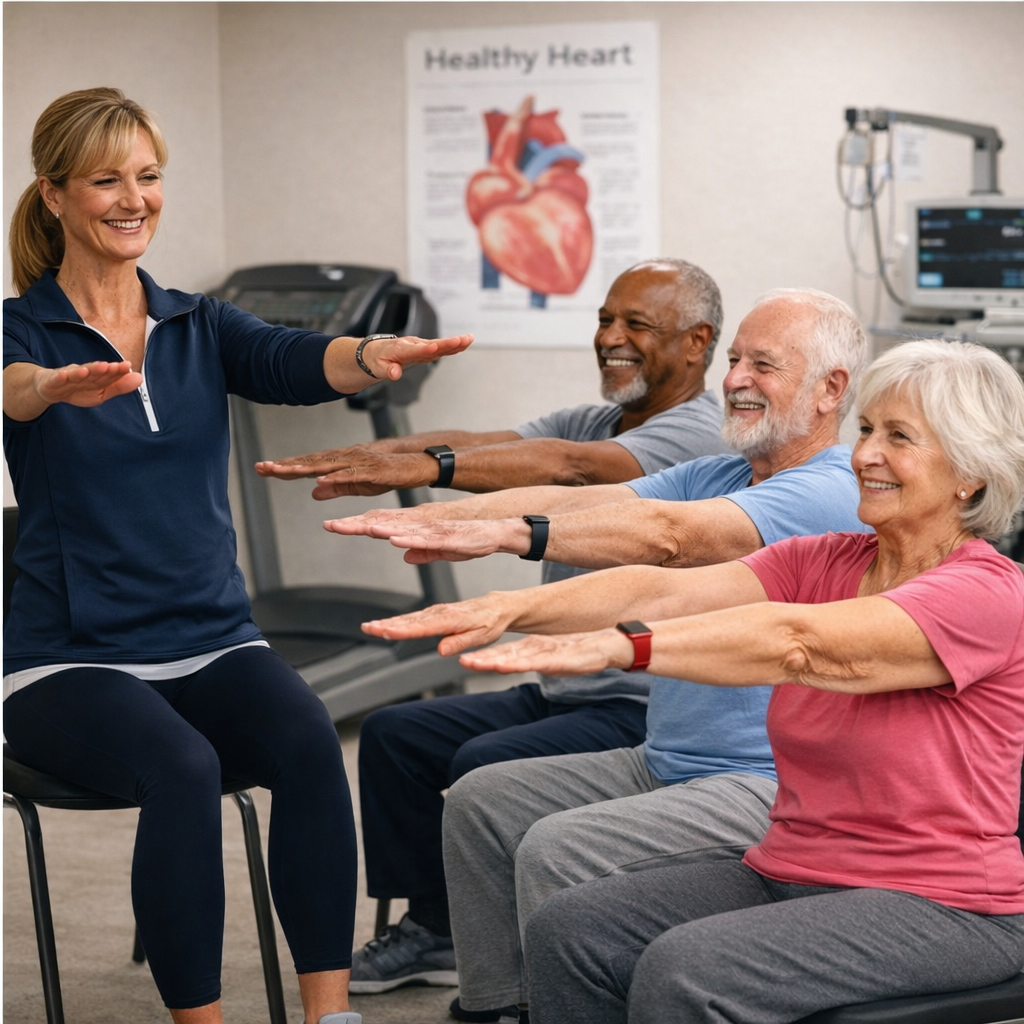
Forever Active
Forever Active is a friendly, low-impact class designed to keep you moving, strong and independent as you age.
Led by a Level 4 Cardiac Rehabilitation Specialist, it is suitable for those who have completed Phase III hospital cardiac rehabilitation, as well as anyone looking for a safe, supportive way to build strength, balance and confidence.
We use simple dance-based movement, light weights and gentle coordination to support heart health, bone strength and everyday mobility — all in a welcoming space where you can go at your own pace.
No experience needed. Just come as you are.
When and Where
Monday 11:00 at Baildon Methodist Wesleys Community Hub
Wednesday 11:00 at Silsden Town Hall
Thursday 12:00 noon at Riddlesden War Memorial Hall
Thursday 18:00 at Central Hall, Keighley
Friday 11:00 at St Peter’s Methodist Church, Crosshills
-
Wear comfortable clothes you can move easily in and supportive footwear (trainers are ideal).
Bring a drink, and a light jumper or layer for relaxation at the end.
If you have your own light hand weights (up to 2kg), feel free to bring them — otherwise I’ll guide you with what we’re using in class.
Please also let me know before we start if anything has changed with your health.
-
This is a welcoming, low-impact dance fitness class designed to support your heart, your joints, and your confidence in movement.
Music plays an important part in the class. The songs are familiar, uplifting, and chosen with care — often ones you’ll recognise, with choruses you might find yourself singing along to. Even a quiet sing helps lift mood, release endorphins, and gives me a gentle way to see how your breathing is responding.
The tempo of each track is matched to its purpose. Slower tracks are used when working with weights, while slightly faster rhythms are saved for simple, more engaging footwork — supporting both the body and the brain without overload.
We begin gently. The first 10–15 minutes are a gradual warm-up — simple marching, toe tapping, and easy movements that slowly increase in range. This gives your body time to adjust and allows your blood vessels to open fully, so your heart is properly supported before working harder.
From there, we move between:
– light aerobic sequences to raise the heart rate
– simple strength work using small hand weights
– steady, repeatable routines that are easy to follow
There’s always a chair nearby for balance or rest.
You’re encouraged to listen to your body at all times. If something feels too much, you can slow it down, simplify the steps, or keep your feet gently moving — even small movements like toe scrunching help your calf muscles support blood flow back to the heart.
We always finish gradually, allowing your heart rate to come down safely before moving into gentle stretching and relaxation.
What makes this different
This isn’t about pushing through or keeping up.
It’s about working with your body in a way that feels safe, steady, and sustainable.
The class is designed with an understanding of how the heart responds to exercise, and how important it is to:
– build up gradually
– avoid sudden stops
– support circulation throughout
Rather than jumping straight into stretches, we take time to cool down properly. This helps prevent dizziness or strain on the heart and allows your body to transition back to rest safely.
Strength work is woven in using light weights — not to strain, but to gently support muscles and bone health, which becomes increasingly important over time.
You are always in control of the pace.
Why we move this way
Your heart, muscles, and circulation all work together.
When movement is introduced gradually, the body adapts more efficiently and with less stress.
The warm-up allows your blood vessels to dilate, improving blood flow and reducing the workload on the heart.
Keeping the feet moving — even gently — supports the calf muscles in acting as a pump, helping blood return to the heart more easily.
The alternation between aerobic movement and lighter strength work allows the heart to be conditioned safely, while also supporting joint stability, balance, and bone health.
Everything is designed to help your body feel safe enough to respond well.
The benefits people notice
People often come wanting to feel safer and more confident in their bodies again.
Over time, you may notice:
– improved stamina and energy
– better balance and coordination
– increased confidence in everyday movement
– reduced breathlessness with activity
– stronger muscles and improved bone support
– a sense of enjoyment in movement again
And just as importantly — a sense of reassurance that your body can do more than you thought.
What to expect
– A friendly, welcoming group — no pressure to perform
– Simple, easy-to-follow routines with options at every level
– The freedom to rest at any time
– Chairs available throughout for support or reassurance
– A gradual warm-up and cool-down designed to support heart health
– Gentle stretching at the end, when the body is ready for it
– A calm, steady pace that builds confidence over time
All venues have access to a defibrillator, and the class is delivered by a BACPR-trained Level 4 Cardiac Rehabilitation Specialist.
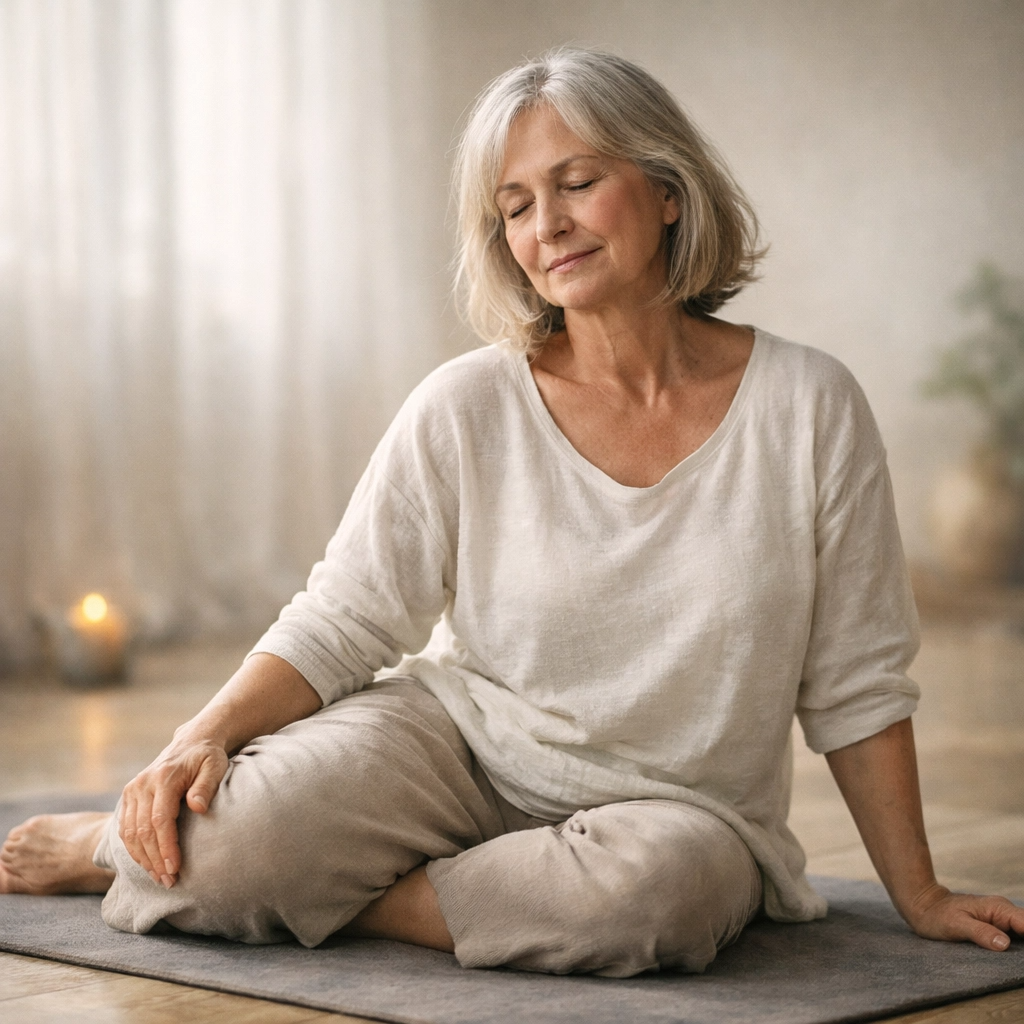
Gentle Somatic Yoga
A gentle, mostly floor-based class using slow, guided movement to help your body unwind and your mind soften. Class numbers are kept small to allow for a calm, spacious environment and a more individual, attentive approach.
This is not a typical yoga class. There’s no pressure to stretch, perform or keep up. You’ll be invited to move in a way that feels right for you, with plenty of rest, simple breath awareness and deeply relaxing guided rest.
Over time, this work can help reduce tension, improve comfort and mobility, support better sleep, and build greater self-awareness and self-esteem — often bringing a quiet sense of ease into everyday life.
Suitable for those dealing with long-term stress, chronic fatigue, or general mental and physical wellbeing concerns.
If you are returning to exercise after a recent cardiac event or major health issue, please consider our Forever Active class as a starting point.
When and Where
Tuesday 11:00 at Central Hall, Keighley
-
Please wear comfortable, warm clothing that allows you to move easily. Layers are helpful, as the body can cool down during rest.
Bring a soft squishy thick mat (even a self inflating camping mat) and anything that helps you feel at ease — a blanket, small pillow or cushion are all very welcome.
There is no need to prepare or “be good” at anything. You’ll be gently guided throughout, with plenty of options to rest whenever you like.
Arrive a few minutes early so you can settle in and begin unhurried.
-
What happens in a class
This isn’t about stretching, fixing, or getting into the right shape.
It’s about learning how your body organises itself — and giving it better information so it doesn’t have to work so hard.
We move slowly. Sometimes very slowly.
Not to be gentle for the sake of it, but because slowness gives your nervous system time to notice. And when you notice, things begin to change.
You might be invited to:
– notice where you would like to take a breath
– make a movement smaller rather than bigger
– rest more often than you expect
– close your eyes and feel rather than copy
There’s no pressure to keep up, and nothing to get right.
What makes this different
Most exercise focuses on strength, flexibility, or posture.
This work focuses on how movement is organised.
Many of us live with patterns of holding — in the neck, shoulders, jaw, hips, or back — that feel normal but create effort, stiffness, and pain over time.
Instead of forcing change, we explore.
Small, curious movements help your brain sense where things are unclear or overworked. As that clarity improves, the body often lets go of tension on its own.
It’s less about doing more…
and more about doing just enough for the body to feel safe to change.
This is why things can feel surprisingly easier, lighter, or more connected — without pushing or stretching.
As I often say in class, the aim isn’t strength first — it’s better information.
Why we move this way
When movement feels unfamiliar or uncertain, the body tightens to protect you.
When it feels clear and safe, it softens and becomes more efficient.
This work helps:
– improve how your brain maps your body
– restore communication between different parts of you
– reduce unnecessary effort and bracing
– support joints without forcing them
You’re not being corrected.
You’re learning to sense, choose, and organise movement in a way that suits your body.
The benefits people notice
People often come for pain, stiffness, or tension.
They stay because things begin to feel different.
You might notice:
– less tightness in neck, shoulders, hips or back
– easier walking, sitting, or getting up and down
– improved balance and coordination
– a quieter mind without trying to “switch off”
– a sense of calm that carries into daily life
Sometimes the changes are subtle.
But they tend to last, because they come from learning — not forcing.
A different kind of class
You don’t need to be flexible.
You don’t need to be fit.
You don’t need to try hard.
In fact, trying less is often where the magic happens.
We work with your nervous system, not against it.
And over time, that changes not just how you move — but how you feel in yourself.